

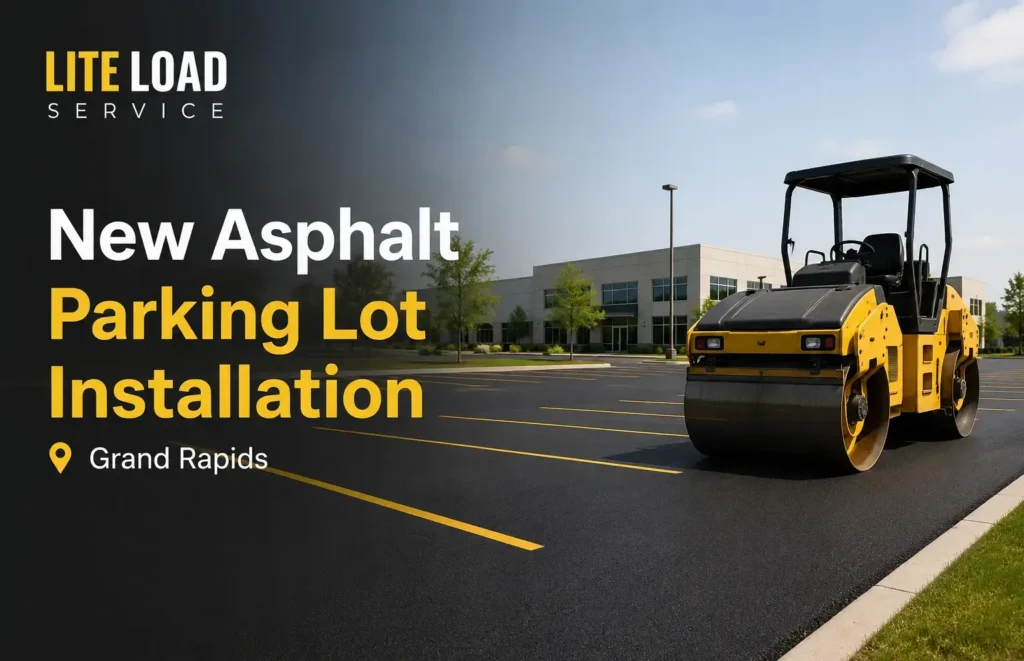
A new asphalt parking lot for a Grand Rapids business should be planned around site conditions, drainage, traffic, pavement design, and long-term use. The process starts with evaluating the soil and property layout, then preparing the subgrade, building the aggregate base, installing the asphalt, and finishing the lot with striping and signage. Businesses should also account for Michigan’s freeze-thaw conditions and the types of vehicles using the lot. Retail parking, employee lots, and industrial properties may require different pavement designs based on traffic and load requirements. A qualified local asphalt contractor can evaluate the property and develop a parking lot plan suited to its specific conditions.
________________________________________________________________________
A successful commercial parking lot starts long before the asphalt arrives. The site needs proper layout, drainage, base preparation, traffic planning, and a pavement design suited to how the property will be used.
A new asphalt parking lot installation in Grand Rapids can rely on planning decisions made weeks before a crew ever shows up. This guide walks through what actually needs to happen at each stage, from the first site walk to the final striping, so you know what to expect and what to ask your contractor.
Start With the Site
Every parking lot decision should follow from what the site actually looks like, not the other way around. Pavement thickness, drainage design, and construction sequencing all depend on existing conditions.
Before any design work begins, a contractor should walk the property and evaluate:
- Existing soil conditions and load-bearing capacity
- Any existing pavement, foundations, or structures that need removal
- Total property size and usable paving area
- Elevation changes across the lot
- Natural and existing drainage patterns
- Location of existing utilities, above and below ground
- Vehicle and pedestrian access points
- Any constraints that could affect construction, such as tight site access or nearby structures
Skipping this step is one of the most common reasons parking lot projects run into unexpected costs later.
Plan the Parking Lot Around How Your Business Operates
A parking lot designed without input from how the business actually runs will create daily friction. Traffic flow, vehicle types, and peak usage patterns should shape the layout, not just the available square footage.
Before construction, think through:
- How many spaces customers need during peak hours
- Separate employee parking, if the property supports it
- Delivery vehicle access and turning space
- Service vehicle routes, including trash pickup
- Emergency vehicle access
- Loading dock or loading zone placement
- Turning movements for larger vehicles
- Pedestrian paths between parking areas and entrances
Accessible parking requirements should follow current ADA and local Grand Rapids code standards. A contractor familiar with commercial paving projects can help confirm what applies to your specific property.
Get Drainage and Grading Right
Water is the single biggest threat to a new parking lot’s lifespan. Drainage decisions made during planning determine whether the pavement holds up through Michigan winters or starts breaking down within a few years.
- Poor drainage: Water sits on the surface or seeps into the pavement structure instead of draining away.
- What it can cause: Soft spots, alligator cracking, potholes, and pavement failure well ahead of schedule.
- What proper planning does: Positive slope, correctly placed catch basins, and graded surfaces move water off the pavement and away from the base, protecting the structure underneath.
Freeze-thaw cycles make this especially important in West Michigan. Water that isn’t properly drained can freeze, expand, and crack pavement from within.
Focus on the Base Before the Asphalt
The asphalt surface only performs as well as what’s beneath it. This is one of the most overlooked parts of parking lot planning, and it’s often where problems start if it’s rushed.
What happens below the asphalt:
- Clearing and excavation remove existing vegetation, debris, and unsuitable material.
- Soil evaluation determines whether the existing ground can support the planned pavement structure.
- Weak or unstable soil may need to be removed or stabilized before construction continues.
- Aggregate base material is placed and compacted in layers to create a stable foundation.
- Compaction testing confirms the base can handle the expected traffic loads.
Subgrade preparation and asphalt paving work is not a step to shortcut. A weak or improperly compacted base will telegraph problems, like cracking and rutting, up through the finished surface within a year or two, regardless of how well the top layer of asphalt is installed.
Choose the Pavement Structure for the Property
There is no universal asphalt thickness that works for every commercial lot. The right pavement structure depends on what the property will actually experience day to day.
Factors that influence pavement design include:
- Vehicle weight and frequency
- Whether delivery trucks or heavy equipment will use the lot
- Existing soil strength
- Drainage conditions
- Intended service life of the pavement
- Site-specific constraints
A retail lot built mainly for passenger vehicles has different structural needs than a lot built for asphalt paving for retail and industrial properties handling regular truck traffic and heavier loads. Industrial and loading areas typically require a thicker, more durable pavement section to hold up under repeated heavy loads.
Understand the New Construction Paving Process
Once planning is complete, construction generally follows this sequence:
- Site preparation and clearing
- Grading and drainage installation
- Subgrade preparation and stabilization
- Aggregate base installation and compaction
- Asphalt placement
- Compaction of the asphalt surface
- Striping and finishing details
This is the standard sequence for new construction asphalt paving that West Michigan contractors follow on commercial sites, though the exact timeline shifts based on site size and conditions. Every new asphalt parking lot installation in Grand Rapids follows this same order, even when the schedule for each stage differs.
What to Expect During Installation
Business owners often want to know how construction will affect daily operations. Here’s a general breakdown.
Before
Site access may be restricted or rerouted. Equipment and materials arrive on site, and any existing pavement or vegetation is cleared.
During
Expect equipment noise, temporary traffic changes, and staged material delivery. Asphalt is placed in sections and compacted while still hot, so timing matters.
After
The pavement needs time to cure before it can handle regular traffic. Striping, curbs, and signage are added once the base layer has set.
Understanding what to expect during new asphalt parking lot installation helps business owners plan around construction rather than being caught off guard by it. Your contractor should walk you through a realistic schedule based on your site, since exact timing depends on weather, size, and site conditions rather than a fixed number of days. Every new asphalt parking lot installation Grand Rapids business plans for should include this kind of walkthrough before work begins.
Plan for Grand Rapids Weather
West Michigan weather plays a direct role in parking lot planning and construction. Freeze-thaw cycles, spring moisture, and winter conditions all affect both the pavement’s long-term performance and when construction can realistically happen.
Asphalt needs to be placed within a specific temperature range to compact and cure properly. Spring thaw can leave soil soft and unstable, which affects subgrade work. Winter conditions generally rule out paving altogether.
There isn’t one month that’s automatically best for every project. Actual paving conditions depend on weather at the time, how ready the site is, material availability, and contractor scheduling. A good contractor will build the timeline around these factors rather than a fixed calendar date.
Budget for the Entire Project
Parking lot costs go well beyond the asphalt itself. Planning a realistic budget means accounting for the full scope of work.
Costs also shift depending on the property type, since asphalt paving for retail and industrial properties often calls for different base thickness and material quantities. Cost factors typically include:
- Site excavation and clearing
- Grading and drainage installation
- Base materials and compaction
- Asphalt quantity based on lot size and thickness
- Pavement design requirements
- Site access and equipment mobilization
- Striping, curbs, and concrete work
- Any repairs needed for unexpected subgrade issues
To gain a better understanding of what influences commercial paving costs, refer to the article “How Much Do Residential and Commercial Asphalt Paving Cost?” The lowest initial bid isn’t always the lowest long-term cost, especially if it skips proper base work or drainage planning.
Choose the Right Asphalt Contractor
The contractor you choose affects every stage of this process. Before signing a contract, ask:
- Do you evaluate existing soil and site conditions before proposing a design?
- How will drainage be handled on this specific site?
- What pavement structure do you recommend, and why?
- How will subgrade preparation and asphalt paving work be handled on this site?
- How will traffic be managed during construction?
- What exactly does your proposal include?
- How are unexpected site conditions handled if they come up?
- What maintenance should we plan for after installation?
A contractor who can answer these clearly, with specifics tied to your property, is more likely to deliver a lot that holds up long-term.
Why Lite Load Asphalt
Lite Load Asphalt works with Grand Rapids and West Michigan businesses on commercial paving projects that require real site planning, not just a poured surface. Our approach starts with evaluating soil, drainage, and traffic needs before recommending a pavement structure.
We handle site preparation, subgrade work, and parking lot paving as part of one coordinated process, so the plan matches how your property will actually be used. This is the kind of new construction asphalt paving West Michigan businesses need when a lot has to be built right the first time.
Plan for Maintenance Before the Lot Is Finished
Maintenance planning shouldn’t start after problems appear. It should be part of the original project plan.
A basic maintenance plan includes:
- Routine visual inspections, especially after winter
- Prompt crack repair before water gets into the base
- Keeping drainage structures clear of debris
- Sealcoating on a reasonable schedule to protect the surface
- Refreshing striping as it wears
If cracks or damage do show up down the road, our article on asphalt repair options discusses various common methods for repairing asphalt.
Asphalt or Concrete?
Some property owners weigh asphalt against concrete before committing to a material. The right choice depends on a few practical factors:
- Initial installation cost
- Expected traffic and vehicle weight
- Local climate and freeze-thaw exposure
- Repair and maintenance needs over time
- How the property will be used long-term
Asphalt is often chosen for commercial lots because of its lower upfront cost, faster installation, and easier repair process compared to concrete. For a full breakdown, see Asphalt vs. Concrete for Commercial Parking Lots in Michigan.
Plan Your New Parking Lot the Right Way
Good parking lot planning happens below the surface first. Site conditions, drainage, subgrade preparation, and a pavement structure matched to your property all need to be settled before asphalt goes down. A properly planned new asphalt parking lot installation that Grand Rapids business owners can count on comes from getting these steps right in order, not from rushing to the paving stage.
Knowing what to expect during new asphalt parking lot installation makes the whole project easier to plan around, from your first site visit to the day the lot reopens. If you’re planning a new commercial parking lot, Lite Load Asphalt can walk your site, evaluate conditions, and put together a plan built around how your property actually operates. Contact us to start the conversation before your next paving season.