

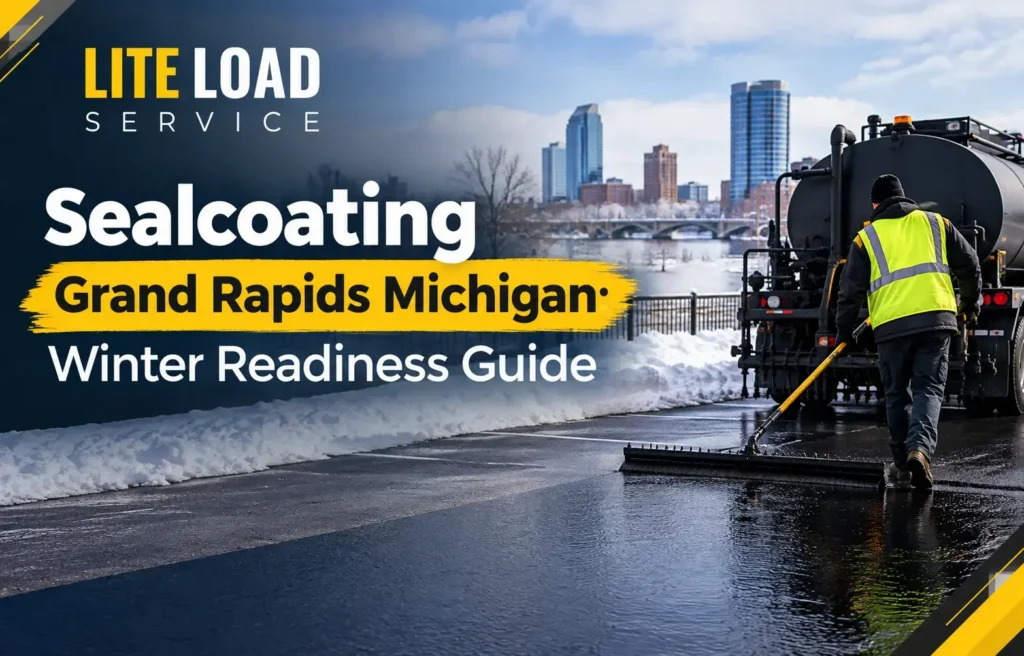
Sealcoating Grand Rapids, Michigan can help protect sound asphalt from moisture, oxidation, and everyday wear before winter. But sealcoating should not be used to cover serious pavement problems. Cracks, potholes, drainage issues, and weakened areas should be inspected and repaired first. For Grand Rapids businesses, the right time to sealcoat depends on pavement condition, weather, and curing conditions. A pre-winter inspection can help determine whether your parking lot needs sealcoating, repairs, resurfacing, or routine maintenance.
Michigan winters do not give damaged asphalt much room for error. Water gets into cracks, freezes, expands, and can leave a parking lot with larger cracks and new potholes by spring.
That makes sealcoating Grand Rapids, Michigan, more than a question of how your pavement looks. Before applying a protective coating, you need to know whether the asphalt is still in good enough condition to benefit from it.
For commercial properties, the right approach starts with an inspection. If the pavement is structurally sound, sealcoating may help protect the surface through another season. If there are serious cracks, potholes, drainage problems, or widespread deterioration, repairs may need to come first.
Key Takeaways
- Sealcoating protects structurally sound asphalt. It does not repair damaged pavement.
- Cracks should be filled and cured before any sealcoat is applied.
- Potholes, sinking sections, and widespread alligator cracking need repair, not sealcoating.
- Timing depends on temperature and dry weather, not a fixed calendar date.
- Drainage should be checked and cleared before the first freeze.
- A seasonal maintenance plan catches problems earlier than waiting for visible damage.
What Does Sealcoating Protect?
Sealcoating is a protective coating applied over sound asphalt to help reduce surface exposure to water, UV radiation, oil, and other damaging elements. It is a preventive layer, not a repair material.
What it helps with:
- Reducing moisture penetration into the surface
- Slowing oxidation and fading from UV exposure
- Limiting minor surface wear from traffic
- Adding a barrier against oil, gas, and general parking lot contaminants
Sealcoating does not repair potholes, structural cracks, sinking pavement, drainage failures, or widespread alligator cracking. A coating applied over any of these issues typically cracks and fails along the same lines as the damage underneath. This is the single most important distinction for a property owner to understand before booking the work.
How Do You Know If Your Parking Lot Is Ready for Sealcoating?
A short walk-through answers most of this. Look for the following before scheduling anything.
Check the Cracks
Hairline surface cracks are usually manageable. Wide cracks, branching cracks, or cracks with crumbling edges point to deeper pavement failure that needs repair before any coating goes down.
Look For Potholes And Failed Patches
Sealcoating is not a substitute for repair. A pothole or a failing patch will still be there under the coating, and it will get worse over winter regardless of what is applied on top.
Watch For Standing Water
Ponding that lasts more than a day after rain usually means a drainage or base problem. Sealcoat will not solve that, and applying it over a chronically wet section wastes the material.
Check The Pavement Surface
Oxidation, fading, and a rough, dry texture are the classic signs your parking lot needs sealcoating. These are cosmetic and structural warning signs that the protective layer has worn off.
Look At Previous Maintenance
A lot with a consistent repair and sealcoating history is usually a better sealcoating candidate than one that has been neglected for several years. Maintenance history tells you a lot about what is likely happening under the surface.
What Should You Fix Before Sealcoating?
Use this as a pre-sealcoat checklist:
- Crack filling
- Pothole repair
- Failed patch replacement
- Drainage correction
- Oil-contaminated or heavily damaged areas
- Loose debris and surface contaminants
- Striping considerations for after the coat cures
The correct order is inspect, repair, clean, sealcoat, and restripe when appropriate. Every pavement is different, so the exact sequence can shift depending on the scope of damage. A lot that needs parking lot repair work should complete that first and let it cure before a coating is applied.
When Is the Right Time to Sealcoat in Grand Rapids?
Sealcoating Grand Rapids, Michigan work depends on temperature, dryness, and cure time, not a fixed date on a calendar. Sealcoat generally needs to go down while temperatures are still above roughly 50°F, with enough dry weather before and after application for the material to cure properly.
Rain in the forecast, an early cold snap, or unusually wet ground can all push a project back. A contractor should evaluate the current pavement condition and short-term weather before locking in a schedule, rather than working off a generic date that ignores what is actually happening that season.
How Does Sealcoating Fit Into a Michigan Parking Lot Maintenance Schedule?
Sealcoating should be one part of a larger plan, not a one-time cosmetic fix. A basic parking lot maintenance schedule Michigan property owners can follow looks something like this:
- Spring: Inspect winter damage, identify potholes, check drainage, plan repairs.
- Summer: Complete repairs, address cracks, schedule sealcoating once conditions allow.
- Fall: Finish pre-winter inspection, seal remaining cracks, check drainage, confirm snow removal plans.
- Winter: Monitor for new damage, document problems, plan spring repairs.
Not every property fits this exactly. Traffic volume, pavement age, drainage conditions, and repair history can all shift the plan. The framework is a starting point, not a rulebook every lot has to follow to the letter.
How Often Should Commercial Parking Lots Be Sealcoated?
Most commercial parking lot sealcoating West Michigan contractors recommend falls in a roughly two- to three-year window, but readiness matters more than a strict interval. A high-traffic retail lot may need it closer to the two-year mark. A lower-traffic office lot might stretch further.
The better way to think about it is condition, not the calendar. If the surface is oxidized, faded, and structurally sound, it is likely ready. If it is still dark and holding up well, sealcoating early adds cost without meaningful benefit.
When Should You Skip Sealcoating and Repair the Asphalt Instead?
This is the decision that gets skipped most often, and it is where property owners lose the most money.
Sealcoating may make sense when:
- The asphalt is structurally sound
- The surface is faded or oxidized
- Cracks are limited and have been addressed
- There are no major drainage problems
- The pavement has not reached structural failure
Repair or resurfacing may make more sense when:
- There are widespread potholes
- Large areas are sinking
- Alligator cracking covers a significant portion of the lot
- The base is failing
- Water repeatedly pools in the same spots
- Previous patches keep failing
- The pavement is near the end of its useful service life
Sealcoating a failing lot does not rescue it. It buys a short cosmetic improvement before the same problems return, often within a season.
What Does Winter Do to an Unprepared Parking Lot?
The mechanism is straightforward once you see it laid out.
Water enters a crack. Temperatures drop below freezing. The water expands as it turns to ice, pushing outward on the crack walls. Each freeze-thaw cycle widens the opening slightly and drives it deeper. Snow plows catch on raised or damaged edges and tear off additional pavement. Deicing chemicals accelerate wear on any surface that is already exposed.
Winter damage often starts with water reaching cracks and weak areas before freezing temperatures make the problem worse. By spring, a lot that looked fine in October can show new potholes and widened cracks that were not there before the season started.
What Does a Good West Michigan Pavement Maintenance Plan Include?
Sealcoating is one piece of a broader West Michigan commercial pavement maintenance approach. A complete plan generally includes:
- Routine inspections, at least twice a year
- Crack filling before winter
- Sealcoating on an appropriate cycle
- Pothole repair as issues appear
- Drainage checks and catch basin cleaning
- Striping touch-ups
- Snow removal planning that accounts for pavement condition
- Documentation of inspections and repairs over time
Keeping dated records of inspections and repairs is useful for planning next year’s budget and for showing a consistent maintenance history if a liability question ever comes up. Lite Load has served Grand Rapids and the surrounding West Michigan area since 1997, and a documented history is something clients often lean on when planning long-term. For a fuller look at the yearly cycle, the commercial parking lot maintenance guide breaks down the full annual calendar.
How Can Lite Load Help Prepare Your Parking Lot for Winter?
The right winter preparation starts with knowing what your pavement needs. Lite Load evaluates the condition of your parking lot before recommending a service. That assessment can determine whether you need sealcoating, crack filling, repairs, resurfacing, or a combination of services before winter arrives.
Lite Load provides asphalt repair, resurfacing, parking lot paving, parking lot repair, and sealcoating and crack filling for commercial and industrial properties across West Michigan.
If your pavement already shows damage from previous winters, Lite Load’s parking lot winter damage guide explains how freeze-thaw cycles can affect unprepared asphalt. Before winter arrives, get your parking lot assessed and find out what it actually needs.
Conclusion
The real question is not just when to schedule sealcoating. It is whether the asphalt is actually ready for it. Sealcoating Grand Rapids, Michigan property owners can apply sealcoating to sound pavement to meaningfully protect it through a Michigan winter. Applied to damaged pavement, it is a short-term cosmetic fix that will not hold.
Lite Load offers a free on-site estimate for commercial and industrial properties across Grand Rapids and West Michigan. Request a free estimate before the fall weather window closes.