

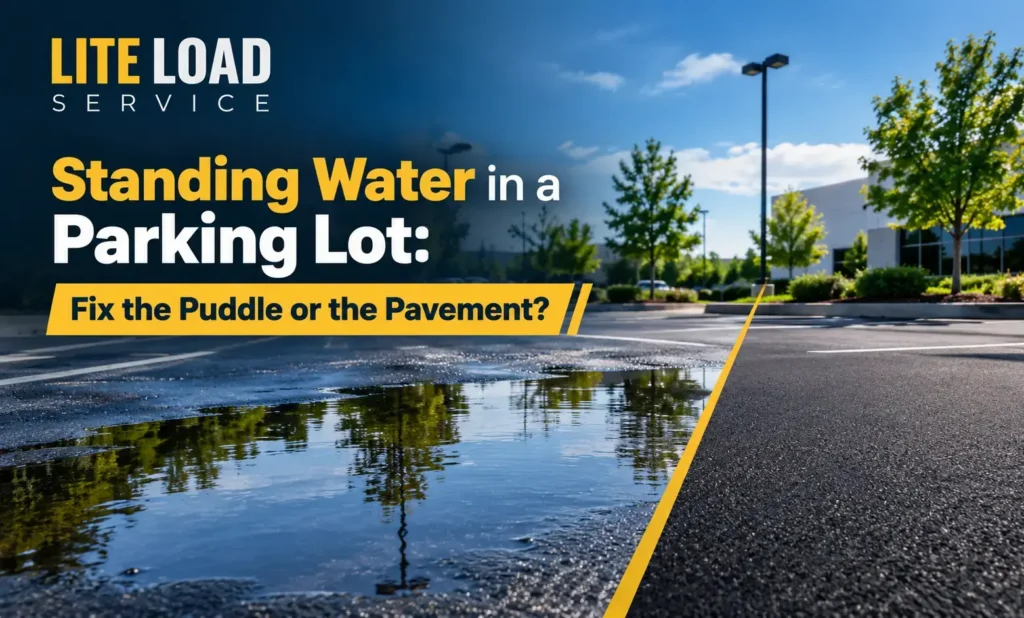
Standing water in parking lot areas has several possible causes. These include poor drainage, an incorrect pavement slope, surface depressions, clogged drainage structures, and problems below the asphalt. A small, isolated puddle may need only a localized repair. Recurring or widespread pooling can point to a larger drainage or pavement problem. Have the pavement inspected before choosing between fixing the puddle and repairing or replacing the pavement.
__________________________________________________________________________
A puddle is easy to see. Its cause often is not. Standing water in parking lot areas may signal a drainage issue, a grading issue, or damage below the surface.
So the central question is this: is the water the problem, or is it evidence of a pavement problem? Patching only the visible puddle often fails. If the cause stays, the water returns, and the patch can fail with it.
Lite Load Asphalt evaluates pavement conditions before recommending a service. This guide shows how to tell a surface issue from a drainage or structural one. It also covers what to check first and when to call for help.
Key Takeaways
- A puddle does not automatically mean the whole parking lot needs replacement.
- Drainage problems can cause recurring pooling.
- Low areas can come from settlement or weak support in the pavement base.
- Drainage structures need to stay clear and working.
- The right fix depends on what causes the water to collect.
- An inspection can show whether the answer is repair, resurfacing, drainage work, or larger pavement work.
Why Does My Parking Lot Hold Water?
Water collects when the pavement cannot move it to a drainage point. Four causes show up most often: slope, low spots, drainage, and conditions under the surface.
Poor Pavement Slope
Asphalt should guide runoff toward a drain, a curb opening, or an open edge. When it does not, water stays where it lands.
In plain terms, a positive slope is pavement graded so water moves away instead of collecting in low areas. Slope can be lost over time through settlement, wear, or uneven repairs.
Low Spots and Depressions
Even a shallow depression can hold water after rain. Common contributors include:
- Settlement in the pavement or the ground beneath it
- Traffic wear in wheel paths and turning areas
- Older repairs that sit slightly lower than the surrounding asphalt
- Pavement movement near edges and patched areas
Drainage Problems
A drainage system carries runoff off the lot. A catch basin is a drain structure that collects surface water and sends it into a storm drain line.
Blocked, damaged, poorly positioned, or undersized structures can leave water sitting on the pavement. In some lots, a drain is present, but the grading does not steer water toward it.
Problems Beneath the Asphalt
The asphalt surface rests on a pavement base and subgrade. If those layers move or weaken, the surface above can sink.
Base failure happens when the stone layer supporting the asphalt weakens or shifts. Surface patching over that kind of problem may not last. Not every low spot points to a failed base. A depression that keeps returning after repairs is worth a closer look.
Is the Puddle the Problem or a Symptom?
Where and how long water collects can point to the likely cause of standing water in parking lot areas. Use this table as a starting guide. These signs do not prove a specific cause.
| What You See | What It May Indicate | What Should Happen Next |
| One small puddle after heavy rain | A localized low spot | Inspect the area |
| Water remains long after rain | A drainage or grading issue | Check drainage and slope |
| Cracks around the low area | Pavement movement | Inspect the pavement structure |
| Multiple areas holding water | Multiple areas holding water | Evaluate the parking lot |
| Potholes developing where water collects | Ongoing moisture damage | Determine the source before patching |
A puddle in the same spot after every rain deserves more attention. Water that clears quickly after a heavy storm is often less concerning.
Can Standing Water Damage Asphalt?
It can contribute to damage, but not in every case. Severity depends on pavement condition, drainage, weather, traffic, and the layers underneath.
- Cracks and damaged areas. Water can enter cracks and worn spots, especially where the surface is already open.
- Repeated moisture. Frequent wetting can contribute to gradual pavement deterioration.
- Freeze-thaw cycles. Water that freezes in existing cracks and weak areas can make them worse.
- Compromised layers. Water that reaches weakened layers can contribute to structural deterioration.
Michigan winters add freeze-thaw stress, so consider getting your asphalt ready for winter and check where water exits the lot.
When Is a Puddle a Simple Repair?
Some puddles do have simple answers. Localized work may make sense when the surrounding pavement is still sound. These situations may fit:
- Small, isolated depressions
- Minor surface damage
- Localized cracking
- Limited pavement deterioration
- Drainage structures that need maintenance
- Areas where the underlying pavement remains structurally sound
The repair should address the cause where possible. Covering only the visible symptom can leave the real problem in place.
When Does Standing Water Point to a Larger Pavement Problem?
Standing water in parking lot areas becomes more concerning when other signs appear with it. These signs deserve a closer look:
Pattern
- Recurring pooling in the same location
- Multiple low spots
- Damage returning after previous repairs
Pavement condition
- Cracking around depressed areas
- Potholes
- Soft or unstable pavement
- Settlement
Water movement
- Water collecting near pavement edges
- Drainage structures that do not appear to move water properly
If the same puddle keeps coming back, the question is not just how to remove the water. It is why the pavement keeps allowing water to collect there.
Patching the visible low spot may not solve the problem if the pavement underneath keeps settling. In some cases, the cause is base failure beneath the surface. In others, a grading or drainage issue only looks like a pavement problem.
When the pavement itself is failing, professional asphalt repair may need to address the base and not only the surface.
What Should a Property Owner Check Before Calling a Contractor?
Notes and photos help an inspector work faster. You do not need to diagnose the pavement yourself. Photos taken after rain, and again once the lot dries, are especially useful.
- Where does the water collect?
- How long does it remain after rainfall?
- Does it happen after every rain or only heavy storms?
- Are there cracks or potholes around the area?
- Is a drain or catch basin nearby?
- Does the water appear to move toward the drainage system?
- Has the area been repaired before?
- Are other parts of the parking lot experiencing the same problem?
How Lite Load Asphalt Approaches Standing Water Problems
Lite Load Asphalt is a family-run commercial and industrial paving company serving West Michigan since 1997. It is also an MDOT pre-qualified contractor. Crews handle grading, base work, and paving in-house.
Owners searching for a parking lot drainage contractor in West Michigan usually want the puddle gone. Lite Load starts by evaluating the pavement and surrounding conditions before recommending a service.
Lite Load evaluation approach
- Look at where water collects and how it moves across the lot.
- Check pavement condition, cracking, and any nearby drainage structures.
- Recommend a fix that matches the cause, not just the visible puddle.
Depending on the findings, the recommendation may involve asphalt repair, parking lot repair, resurfacing, or parking lot paving. The visible puddle does not determine the repair. Pavement condition and the cause of the water do.
For sound pavement with early cracking, sealcoating and crack filling can help limit water entry. It will not correct a low spot or a drainage problem.
When Should You Call a Parking Lot Professional?
Not every puddle needs a contractor. A single shallow spot that dries quickly may only need monitoring. Professional evaluation makes more sense when you see:
- Recurring standing water
- Drainage problems
- Widespread pooling
- Structural-looking pavement damage
- Repeated failed repairs
- Large depressions
- Cracking combined with settlement
- Water affecting traffic areas or parking spaces
When several of these apply, call a parking lot drainage contractor West Michigan businesses can trust to inspect the site.
What Is the Right Fix for Standing Water?
These are general possibilities, not guaranteed diagnoses.
If the issue is… → The next step may be…
- Blocked drainage structure → Inspect and clear the drainage system.
- Small isolated pavement depression → Evaluate whether localized repair is appropriate.
- Widespread grading issue → Check whether the lot keeps a positive slope toward its drains, and assess drainage.
- Recurring settlement → Investigate the pavement structure and underlying conditions.
- Extensive pavement deterioration → Consider whether resurfacing or reconstruction is appropriate.
Choosing between resurfacing and reconstruction also affects budgets. Owners weighing that choice can read about planning pavement spending over its full life.
In Conclusion
Standing water in parking lot areas is often a clue, not the entire problem. The right repair depends on whether the water comes from drainage, grading, surface damage, or conditions beneath the pavement.
If the same area keeps holding water, have the pavement evaluated before patching it again. Lite Load Asphalt can inspect the site and recommend a fix that matches the cause. To start, contact Lite Load Asphalt for a free on-site estimate.